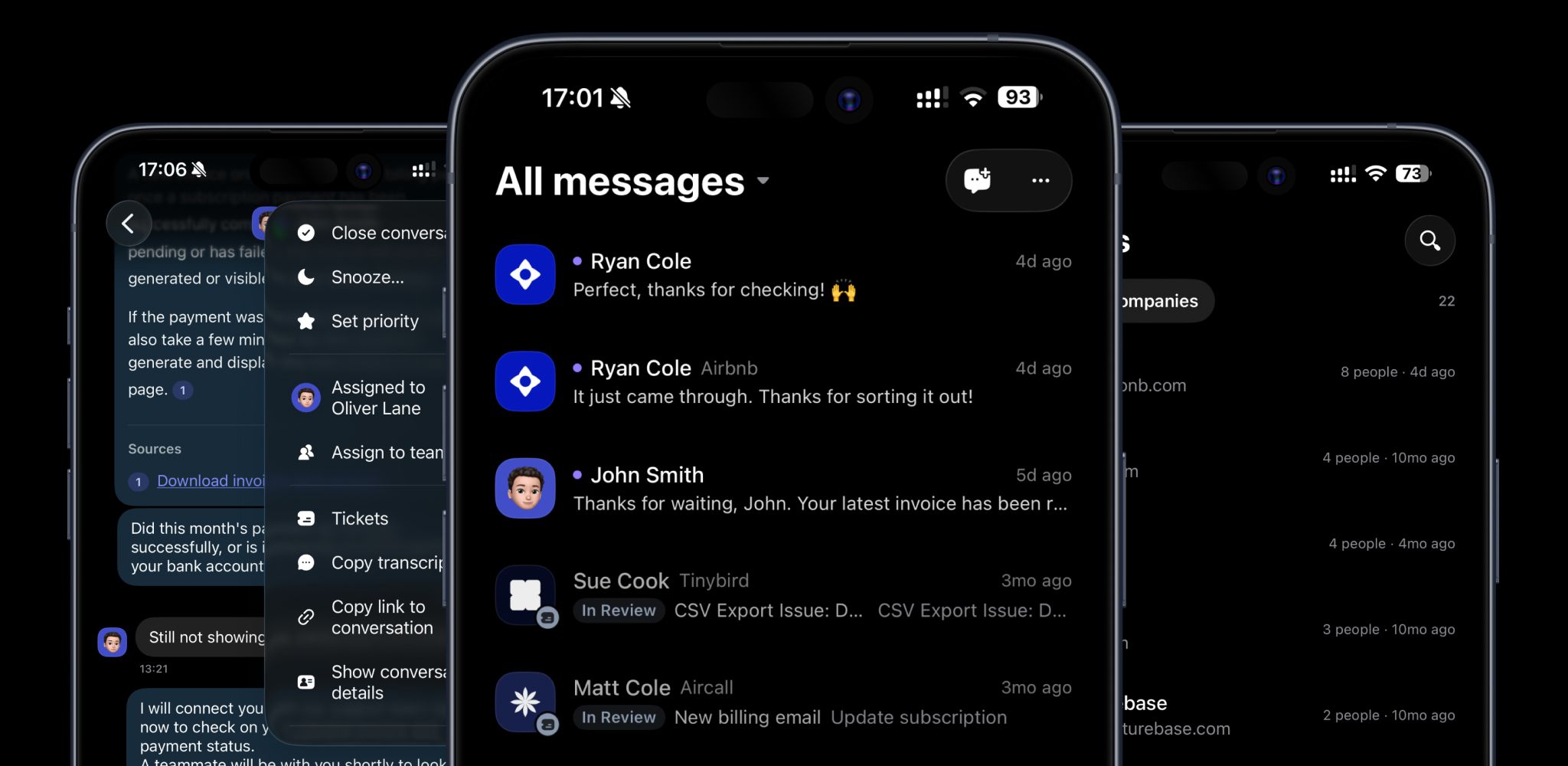
Customer portal redesign: API docs, tabs, and more
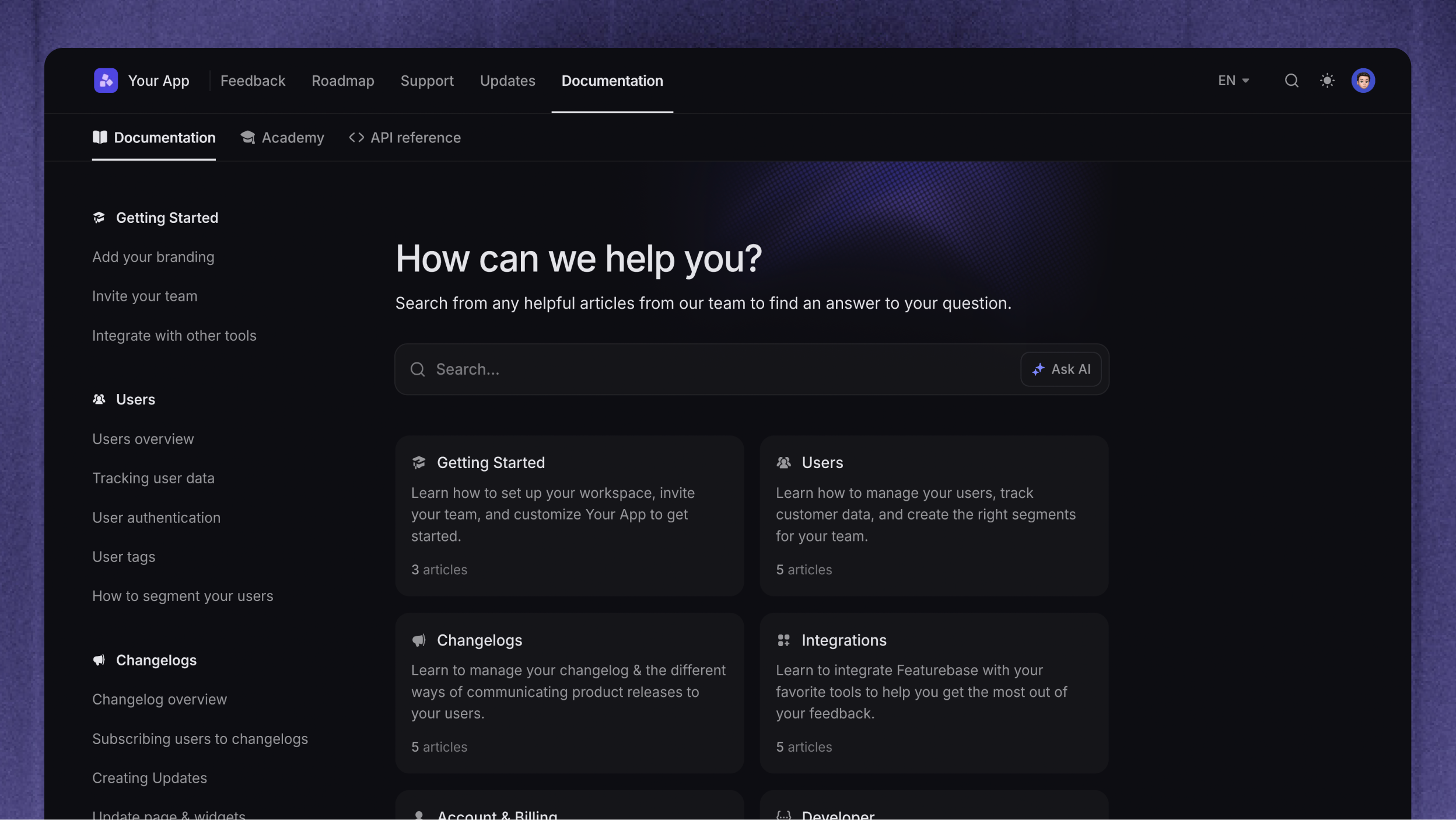
We’ve improved the entire Customer Portal, making it easier for customers to find answers, share feedback, follow their requests, and now even explore your API docs – all in one place.
One connected Customer Portal
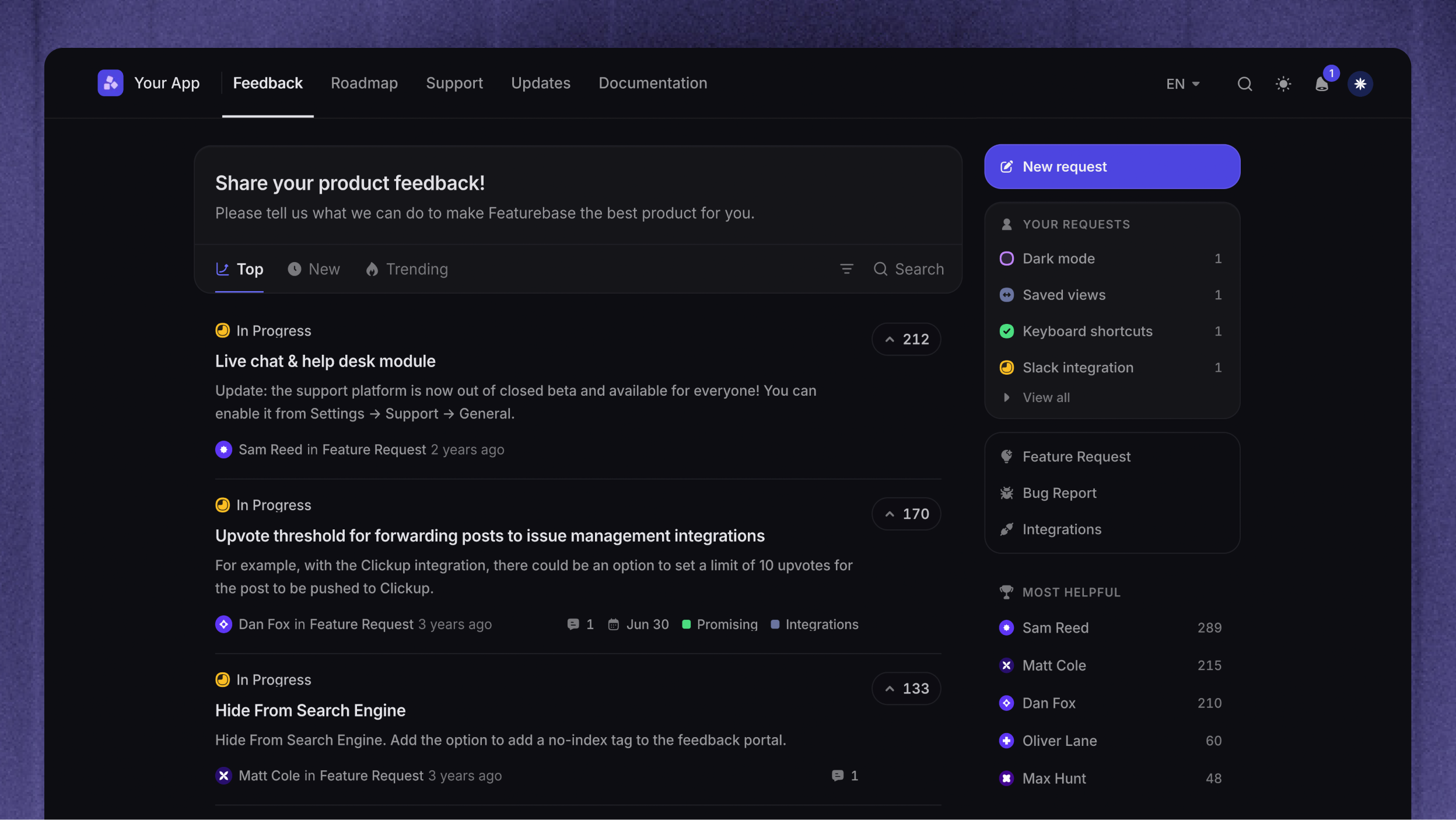
Your Support, Help Center, Feedback, and Updates now come together in one portal with shared navigation.
Customers can find what they need with unified search, or use Ask AI to get answers with links to the sources.
API documentation
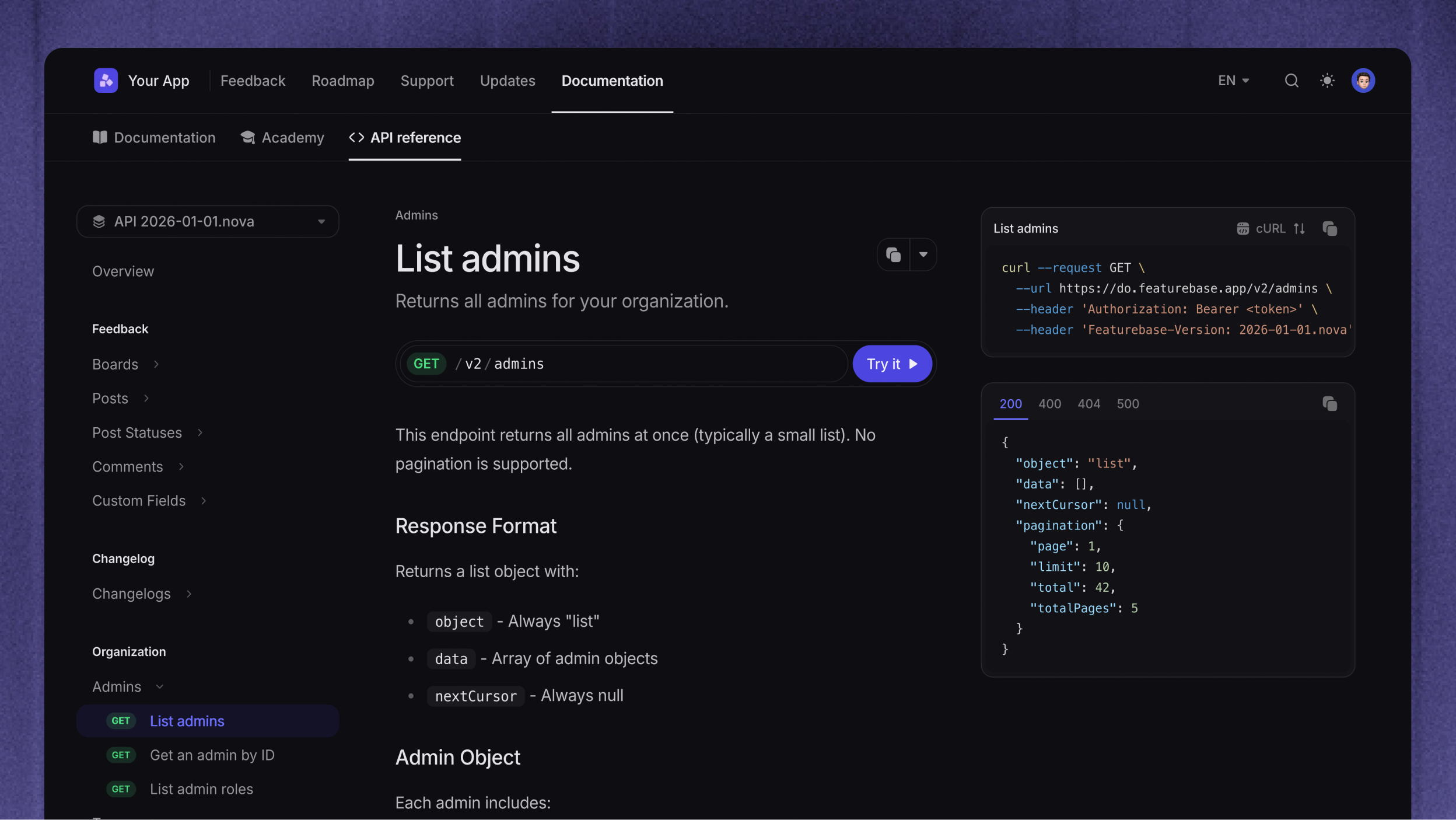
Featurebase now natively supports API docs alongside your help articles, with support for:
OpenAPI imports from a file or URL, plus updates from your build pipeline
Code examples and an interactive playground for testing requests
Multiple APIs and versions, with change review before publishing
API docs are available starting from the Free plan, including the playground. If you use Fibi, it can now answer questions from your published API docs too.
A redesigned Help Center
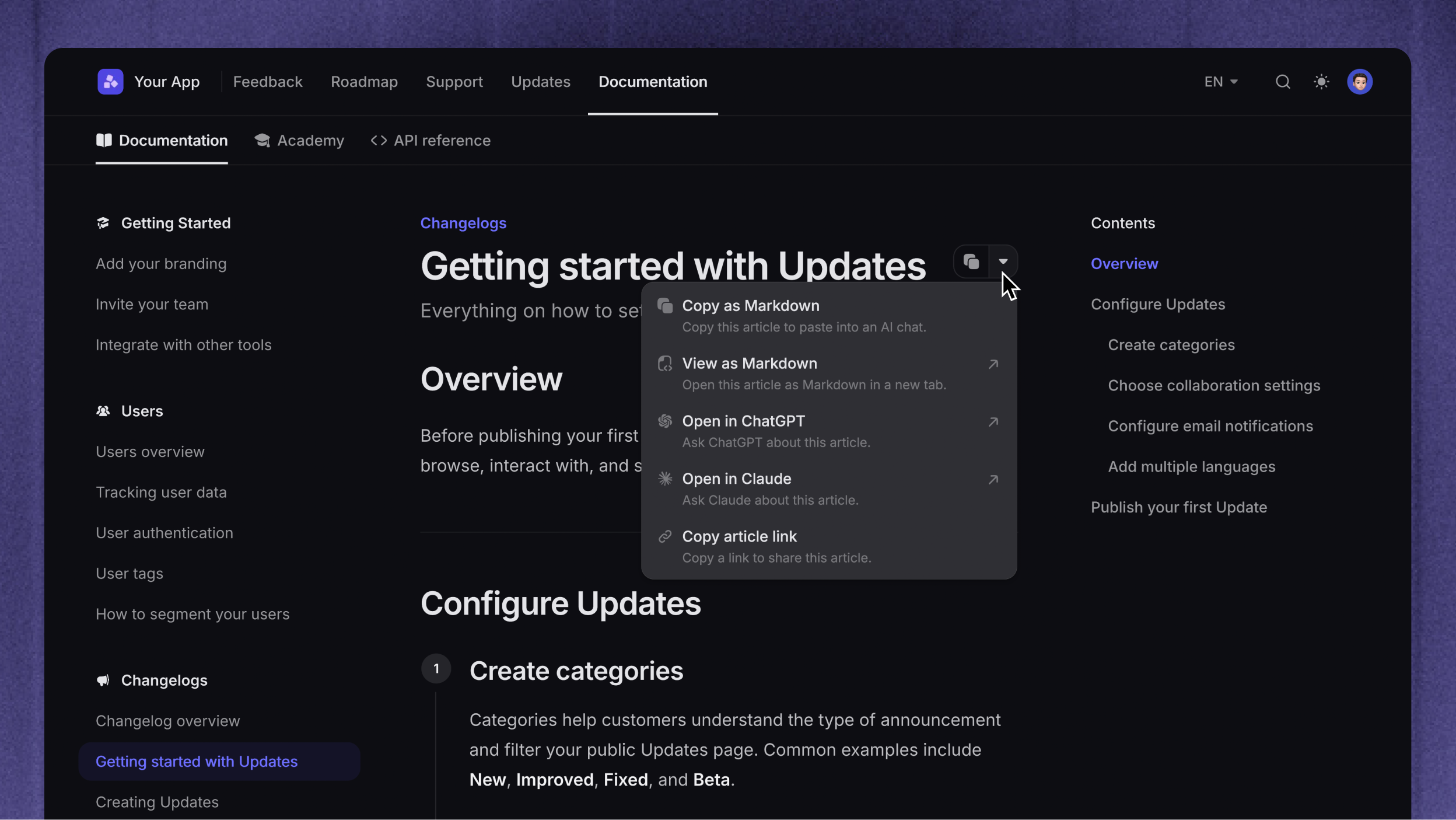
A new layout and rebuilt editor make your docs easier to organize, write, and browse.
Organize your Help Center into tabs for different sections
Build richer articles with cards, content tabs, steps, and accordions
Guide readers with previous/next navigation and related articles
Let readers copy articles as Markdown or open in ChatGPT and Claude
Make it yours
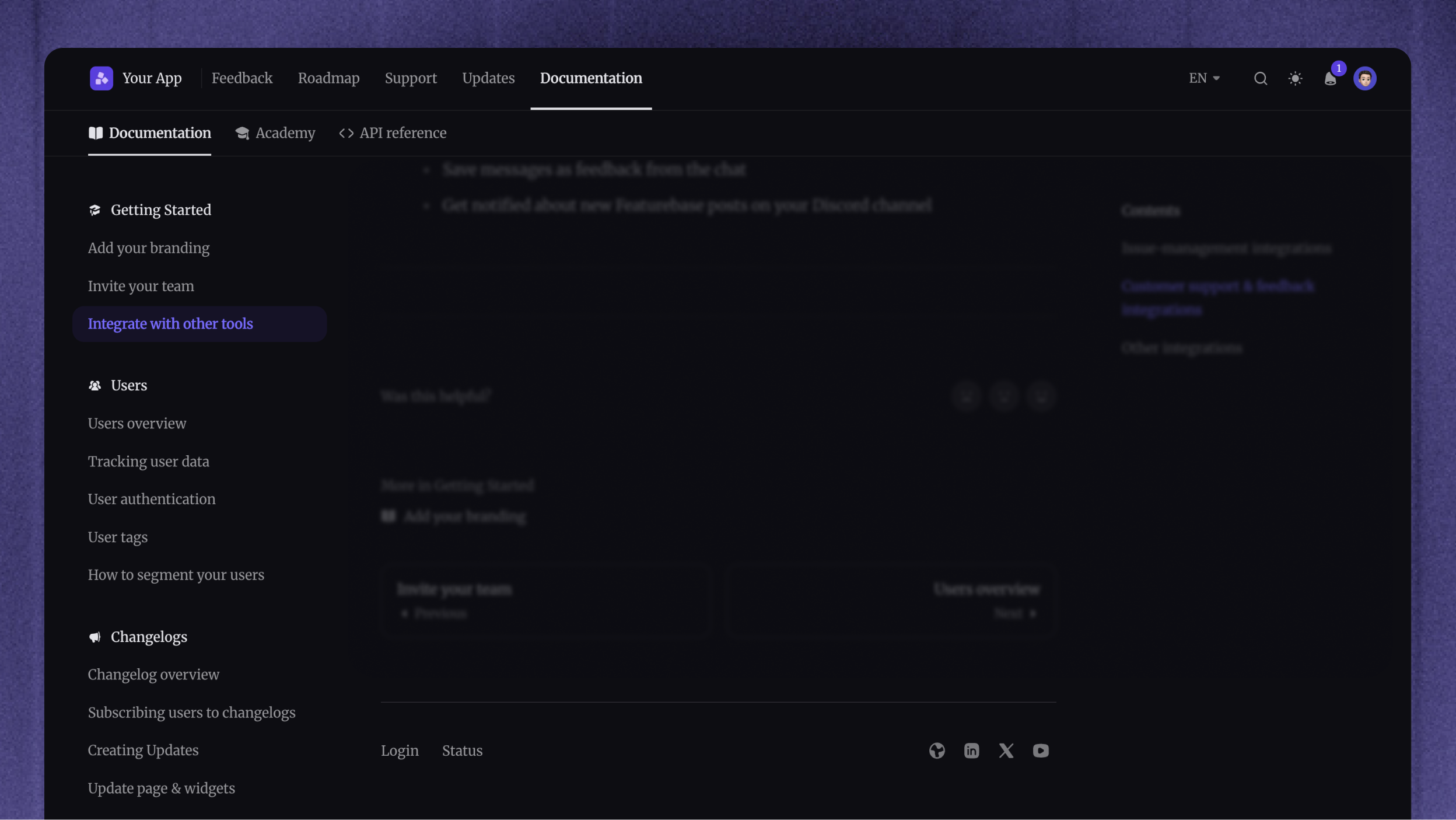
Make the portal match your brand with:
Different fonts, including your uploaded custom fonts
More color controls for light and dark themes
A footer with social links and links to your other pages
You can now also always see your changes as you edit.
Customize your Customer Portal →
New user profiles
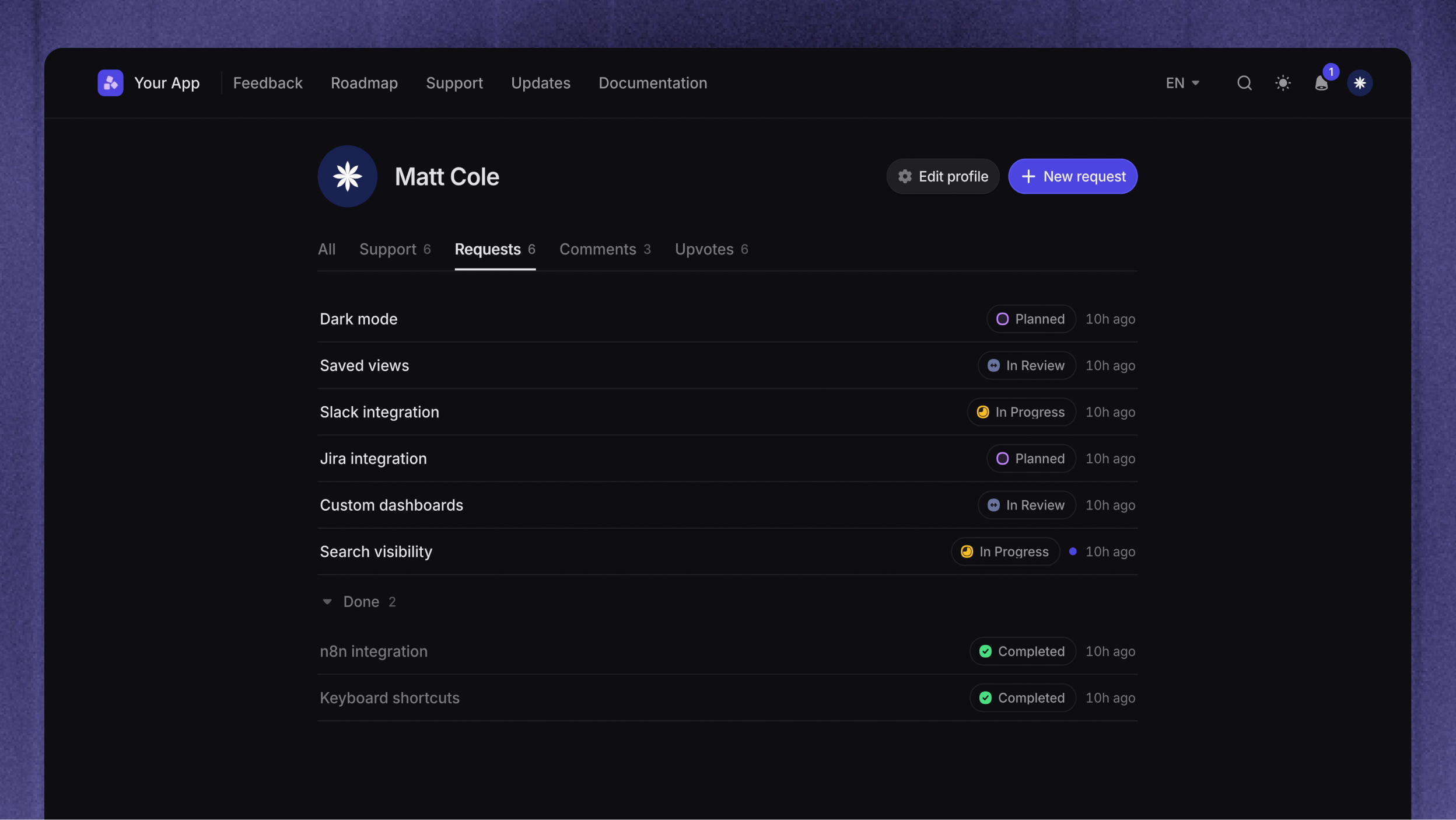
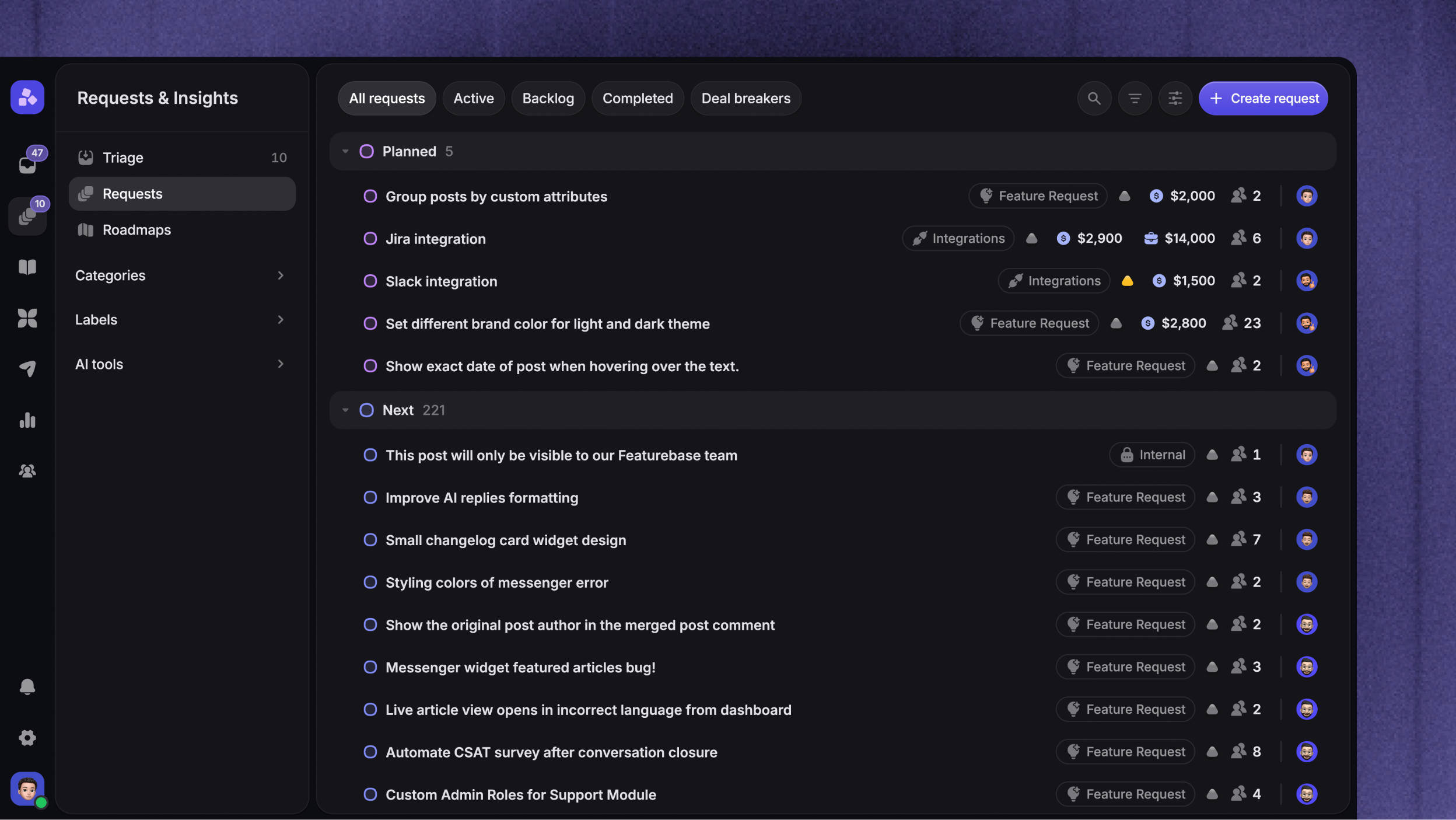
Customers can now see their requests, tickets, and chats in one place, with clear statuses and recent replies. Now it’s easier to know where their issues stand.
And much more
Choose which customer sign-in methods are available
Make your docs easier for AI tools to navigate with
llms.txtNew Updates feed with discussions in a side panel
Suggest an existing request or a relevant answer before customers submit new feedback
Choose where private support requests go, including an external help desk or email
We’re super happy to finally bring Featurebase together into one home for your customers. From here, we’ll focus on polishing each area and making them work even better together.
As always, leave us feedback! 💫